Lifting through low back pain: when to push, when to pause.
Most low-back pain in active people doesn't need rest — it needs the right load. Here's the framework Dr. Andersen uses.

If you train consistently, you will eventually tweak your back. That's not a failure of your program or a sign that you should have started yoga two years ago — it's the cost of asking your spine to do hard work. The question isn't whether back pain happens. It's what you do in the seventy-two hours after it does.
The default reaction is to stop everything. Ice, rest, hope it goes away. Sometimes that works. More often it sets up a slow, frustrating cycle where you feel okay enough to lift, you go back to your old program, and three weeks later you're right back where you started. Here's the framework I walk lifters through at The Spine Studio.
Step one: rule out the red flags
Before anything else, a quick scan. Most low-back pain is mechanical and benign, but a small minority isn't. Get evaluated immediately if you have any of the following:
- Numbness or weakness in both legs
- Loss of bladder or bowel control
- Unexplained weight loss with the pain
- Pain that wakes you from sleep and won't ease in any position
- A recent significant trauma (a real fall, not a bad rep)
These are rare. But they exist, and a chiropractor or physician needs to see you first. Assuming none of these apply, keep reading.
Step two: keep moving — just not the way that hurts
The old advice was bed rest for two days. The current evidence is unequivocal: extended rest makes mechanical low-back pain worse. Within the first 48 hours, your job is to move, often, in directions that feel okay.
The spine is not a fragile structure that needs to be protected. It's a load-bearing structure that needs the right kind of load to heal.
For most lifters, that means walking. A lot. Two or three twenty-minute walks a day, easy pace, nothing fancy. It floods the disc with nutrients, drains inflammation, and reminds your nervous system that movement is safe. It is genuinely the highest-yield thing you can do, and it costs nothing.
Step three: load shift, don't load remove
Here's where most people lose the plot. They take a week off, then come back to their full program at full weight, and re-aggravate the same tissue that hadn't finished healing. Better approach: shift the load while the painful tissue recovers.
Concretely, that often looks like:
- Sub the squat for a leg press or a goblet squat at 50% load
- Sub the conventional deadlift for a trap-bar pull or a Romanian deadlift with shorter range
- Keep the upper body work in full — bench, pull-ups, rows are usually unaffected
- Add dedicated core and hip work: dead bugs, side planks, glute bridges
The lift you can do pain-free at 50% today is more valuable than the lift you can't do at all. You are not detraining. You are managing volume in a window where your tissue is paying attention.
Step four: address what got you here
Acute pain is the symptom. The deeper question — and the one we spend most of a first visit on — is why now? Possibilities, ranked by how often they actually matter:
- Volume spike. You added 30% to your weekly tonnage in two weeks. The tissue couldn't keep up.
- Position drift. Your setup has gradually changed and the load isn't being distributed where you think it is.
- Mobility deficit upstream or downstream. Hips that don't flex enough. A thoracic spine that doesn't extend. The lumbar pays for both.
- Recovery debt. Six hours of sleep, life stress, alcohol Friday and Saturday. Your body's repair budget is broke.
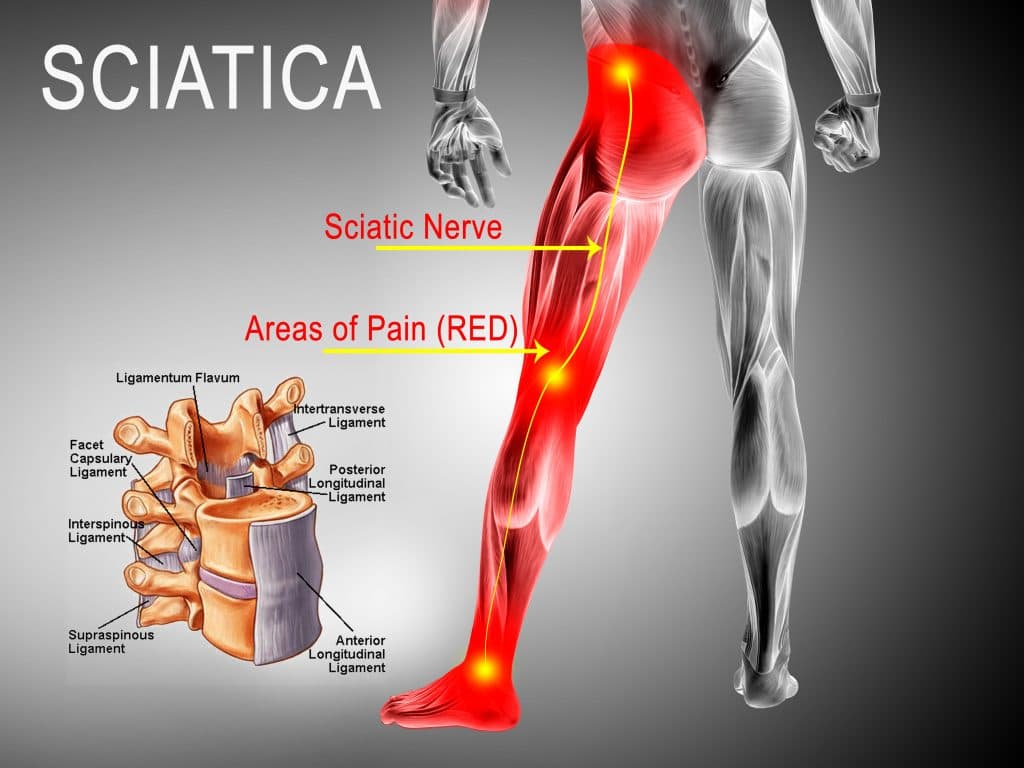
If pain is more than a 4/10, hasn't improved in 72 hours of careful management, refers down the leg below the knee, or keeps you up at night — book an Initial Assessment. We'll run a movement and neurological exam, identify what's driving it, and write you a plan that keeps you lifting where it's safe to lift.
What we actually do in the clinic
For a typical mechanical low-back episode, an Initial Assessment is sixty minutes. We watch you move, check your neurology, and identify where your motion is missing. Treatment that same visit is some combination of precision spinal adjustments to restore segmental motion, dry needling or ART to release the muscle guarding around the painful segment, and a small set of corrective drills you'll do daily.
You go home with an actual written plan: which lifts to keep, which to modify, what to do morning and night, and when to come back. Most lifters see meaningful change inside three or four visits.
The short version
- Rule out red flags first.
- Keep moving — walk often, slowly.
- Shift the load instead of removing it.
- Find and address what got you here.
- If pain is sharp, sticky, or radiates — get assessed.
You don't have to choose between training and your spine. The whole point of the work we do is so you don't have to.
Book your Initial Assessment — $149, all-in.