Gymnastics injuries: protecting growing wrists, backs and ankles.
Gymnasts load their wrists and spine like no other athletes. A look at the most common overuse injuries — and how to catch them before they become chronic.
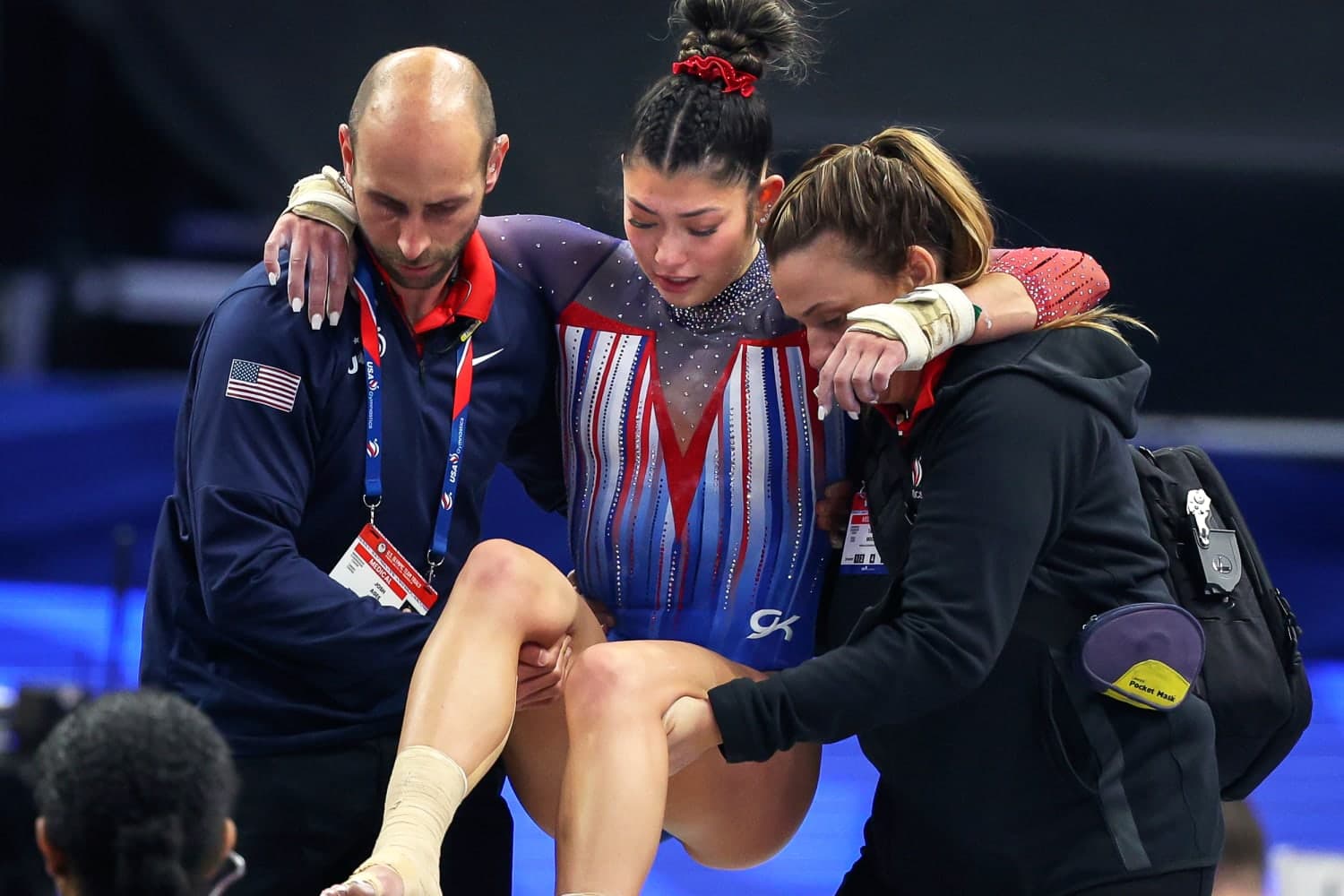
Gymnastics asks more of a young body than almost any other sport. The same wrists that are still developing growth plates are also absorbing full body-weight impact on every vault landing and tumbling pass. The same spine that's still growing is bending, twisting and arching into positions most adults couldn't get close to — and doing it thousands of times across a season of practice.
That combination — high repetition, high load, and a body that's still developing — is why gymnastics has one of the highest overuse-injury rates of any youth sport. Here's what we see most often, and what helps keep gymnasts on the mat instead of on the sideline.
The big three: wrists, low back, and ankles
The American Academy of Orthopaedic Surgeons (AAOS) identifies gymnastics injuries as falling into a few recurring patterns:
- "Gymnast wrist." Repeated weight-bearing through the hands — on vault, bars, floor and beam — places constant compressive stress on the growth plate at the end of the radius. Left unmanaged, this can become a genuine growth-plate injury, not just "sore wrists."
- Low back stress injuries. The repetitive arching (extension) required for skills like back walkovers, bridges and certain landings loads the small joints and bones of the lower spine. In a growing skeleton, repeated extension under load is a well-documented cause of lower-back stress reactions.
- Ankle and knee sprains. Landings — especially imperfect ones — are the most common acute injury mechanism, affecting the ligaments around the ankle and knee.
- Shoulder and elbow overuse. Bars and strength elements place repetitive tension through the shoulder and elbow, which can show up as a dull, persistent ache that gymnasts often shrug off as "normal."
Why "normal soreness" and "overuse injury" get confused
Gymnastics culture — like a lot of youth sport — normalizes a certain amount of discomfort. The challenge is that the line between "worked hard today" and "this joint is starting to break down" is genuinely hard to feel from the inside, especially for a young athlete who doesn't have a frame of reference yet. The general pattern worth paying attention to: soreness that fades within a day or two after rest is usually normal training fatigue. Pain that's localized to one spot, doesn't improve with a rest day, or changes how a skill feels (a wrist that "gives" on landing, a back that won't fully extend without a pinch) is worth getting checked.
According to AAOS guidance on soft-tissue injuries, the earlier a sprain, strain or overuse pattern is identified and managed, the shorter the recovery — and the lower the risk of it becoming a recurring problem that flares every season.
In a body that's still growing, "it'll work itself out" isn't always true — growth plates don't get the benefit of the doubt that adult tendons do.
What we focus on for young gymnasts
Care for a gymnast isn't the same as care for an adult lifter or runner — the goals are pain relief, joint mobility, and making sure growth plates and developing tissue aren't being asked to absorb more than they're ready for. A typical plan blends:
- Joint mobility work for the wrists, thoracic spine and ankles — the three areas that take the most repetitive load in gymnastics and the ones that most often get stiff first.
- Soft-tissue work for the forearms, hip flexors and shoulders, where chronic tightness often shows up before pain does.
- Movement-pattern review — looking at how a gymnast lands, arches and loads their wrists, since small technical habits often explain why the same joint keeps flaring.
- A home program built around the gymnast's actual training schedule, so recovery work fits around practice instead of competing with it.
If your gymnast mentions the same joint hurting more than once across a few weeks — even if it "goes away" between practices — that pattern is worth a look. Catching a developing overuse issue early is almost always a quick fix. Catching it after months of working around it usually isn't.
Getting back to the gym, not just out of pain
The goal of any plan for a young athlete isn't just "stop hurting" — it's making sure the gymnast can get back to full training without the same issue resurfacing the next time conditioning ramps up. That means addressing the joint or tissue that's irritated, but also looking at the load pattern that got it there in the first place. A quick assessment can usually tell within one visit whether something is a normal part of a heavy training block or an early warning sign worth addressing now.
Book an assessment to get a clear answer before it becomes a bigger issue.