Pregnancy & chiropractic: what Webster technique actually does.
Pelvic alignment shapes every step you take — and every position the baby finds. A guide for expecting mothers in Cottleville.
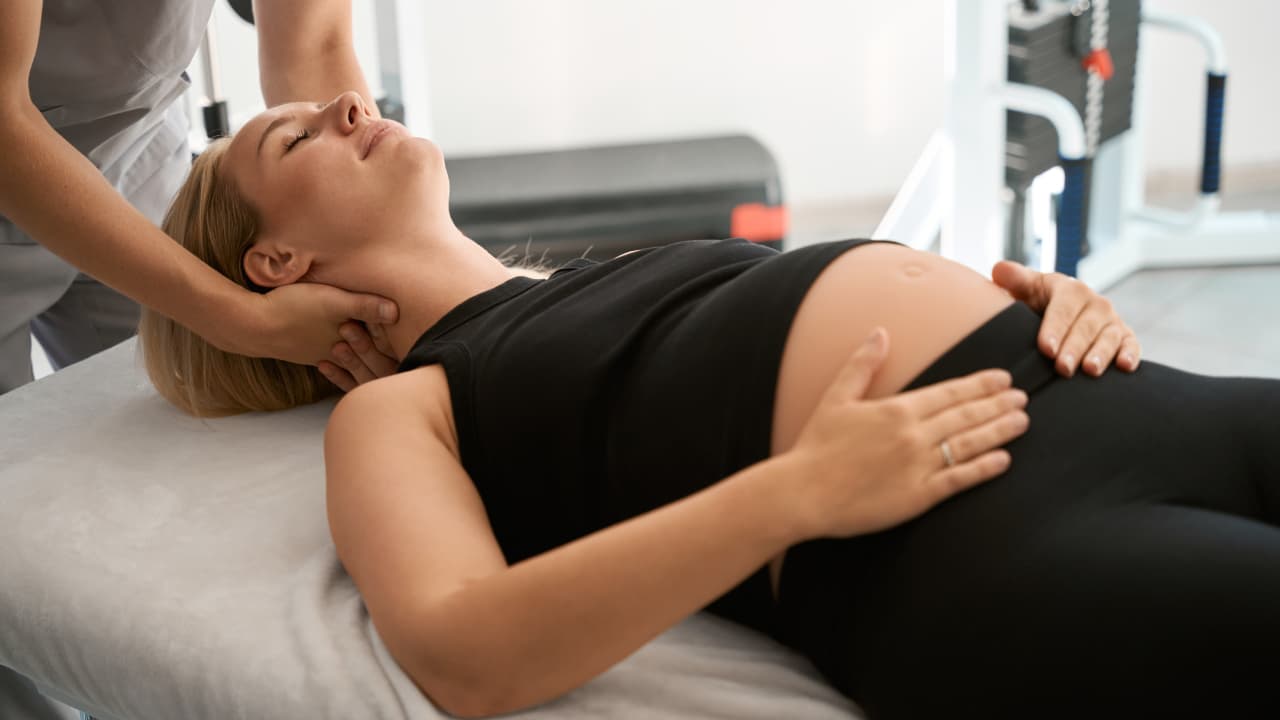
If you've been told to "try a Webster chiropractor" by a friend, midwife, or doula, you're not alone — and you probably weren't told much beyond the name. Webster technique gets shorthand-mentioned a lot in pregnancy circles, but rarely explained. Here's the plain version, including what it actually does, what it doesn't do, and why it's worth knowing about for any pregnancy.
What it is
Webster technique is a specific, gentle method for assessing and restoring sacral and pelvic alignment in pregnant patients. It involves no twisting, no high-velocity movements, and no pressure on the abdomen. The practitioner works with you side-lying, doing a series of soft adjustments at the sacrum and gentle releases of the round ligaments.
It was developed in the late 1970s by chiropractor Larry Webster and is now taught and certified through the International Chiropractic Pediatric Association (ICPA), which maintains the certification standard. Dr. Andersen is Webster-certified.
What it actually does
Three concrete things:
- Restores symmetric motion at the sacroiliac joints. Pregnancy hormones loosen the pelvic ligaments to make room for the baby — which also makes the pelvis prone to subtle asymmetry that the body then tries to compensate for. That compensation is usually where pelvic pain comes from.
- Releases tension in the round ligaments. These ligaments connect the uterus to the pelvis and often pull asymmetrically as pregnancy progresses, causing one-sided pelvic pain.
- Creates an environment where the baby has more room to settle into an optimal position. This is the part most often misunderstood — Webster does not turn a breech baby. What it does is remove mechanical obstructions in the pelvis so the baby has the best possible chance of finding head-down position on its own.
The work is on you, not on the baby. If the pelvis moves freely and symmetrically, the baby has more options about where to go.
Why women come in for it
The most common reasons patients book pre-natal visits at The Spine Studio:
- Pelvic and SI joint pain — by far the most common, especially in the second and third trimesters
- Low back pain — pregnancy-related lumbar pain affects roughly two-thirds of pregnancies
- Sciatica — common as the baby grows and changes pelvic alignment
- A breech presentation usually identified at 32-36 weeks — patients often start coming in then to optimize the chance of natural turning
- Preparation for labor — patients in the final weeks who simply want their pelvis moving as well as possible
The mainstream medical view of pregnancy chiropractic is increasingly positive — ACOG (the American College of Obstetricians and Gynecologists) doesn't specifically endorse Webster but notes that conservative therapies including chiropractic are reasonable for managing pregnancy-related musculoskeletal pain. The Mayo Clinic's pregnancy back-pain page includes chiropractic as one option.
What a visit looks like
If you've never had chiropractic care, here's what to expect:
- An intake covering your pregnancy history, any previous deliveries, and current symptoms
- A focused exam — gait, pelvic alignment, sacroiliac motion testing, soft-tissue palpation
- The treatment itself: side-lying adjustments using a pregnancy-specific pillow setup, soft-tissue work, and gentle ligament releases. Nothing is fast or forceful. Most of my pregnant patients fall asleep mid-session.
- A take-home plan: usually a few specific movements to do daily, hydration and walking cues, and a recommended visit cadence (typically weekly in the third trimester, less often before)
Most patients start care in the second trimester. Earlier is fine — there's no risk in establishing baseline alignment early. If you're already in your third trimester and dealing with pain, it's not too late; many patients see significant relief from just a handful of focused sessions.
And after the baby comes
Postpartum chiropractic and pelvic-floor focused recovery is its own conversation, but worth flagging here: the same pelvic instability that caused issues during pregnancy doesn't resolve the moment the baby is born. The New York Times Well section has covered the growing case for active postpartum recovery care — and our practice supports it.
You spent nine months building a baby. Take the same care building yourself back.
Book a Webster-certified prenatal visit.